China Quality Outdoor Heaters Manufacturer
Warm Up Your Outdoor Living with Premium Outdoor Heaters by Chenrui
As the sun sets and temperatures drop, your outdoor enjoyment doesn't have to end. A high-quality outdoor heater is the ultimate solution for extending the usability of your patio, deck, restaurant terrace, or backyard well into the cooler months. At Chenrui, we combine cutting-edge heating technology with robust design to deliver reliable, efficient, and stylish warmth exactly where you need it. Whether you're hosting a family gathering, serving customers in an al fresco dining setting, or simply enjoying a quiet evening under the stars, our range of outdoor heaters ensures comfort and ambiance are never compromised.
Why Choose Chenrui Outdoor Heaters?
With two decades of expertise in thermal engineering and outdoor appliance design, Chenrui has become a trusted name for commercial and residential heating solutions. Our products are engineered for durability, safety, and maximum heat output. We understand that an outdoor heater is an investment in your space's functionality and appeal. That’s why every Chenrui heater undergoes rigorous testing to withstand various weather conditions while providing consistent, adjustable warmth. From energy-efficient infrared models to powerful patio heaters, we offer a versatile lineup to suit every need and aesthetic preference.
Chenrui Outdoor Heaters: Frequently Asked Questions (FAQ)
Are Chenrui outdoor heaters safe to use on a wooden deck?
Yes, when used according to instructions. All Chenrui patio heaters are designed with safety as a priority. They feature a stable base to prevent tipping, and the heating element or burner is positioned high enough and shielded to direct heat upward and outward. The surface temperature of the base remains low. However, it is always recommended to maintain a clear area free from flammable materials (like furniture cushions or planters) as specified in the user manual, and never place the heater directly against railings or walls.
What is the difference between infrared and radiant/convection outdoor heaters?
Chenrui offers both types, each with advantages. Infrared heaters (like our CR-IE and CR-PS series) emit electromagnetic radiation that heats solid objects (people, furniture) directly, similar to the sun's warmth. This makes them highly efficient and effective in windy conditions, as they don't primarily heat the air. Traditional radiant patio heaters (like our CR-PE series) use a burner to heat a metal or ceramic element, which then radiates heat to the surrounding area while also creating a convection current. They provide a broader, ambient warmth but can be slightly more affected by strong winds.
How long does a propane tank last with a Chenrui heater?
Burn time varies by BTU output and flame setting. A standard 20-pound propane tank will last approximately 8-10 hours at the maximum setting (40,000 BTU) on our ProSeries model. On a lower setting, this duration can extend significantly to 15-20 hours. Our lower-BTU residential models can run for 15+ hours on high. We always recommend having a spare tank on hand for uninterrupted enjoyment during longer gatherings.
Can I leave my Chenrui outdoor heater outside all year round?
While Chenrui heaters are built with weather-resistant materials like stainless steel, we strongly recommend using a protective cover when the heater is not in use for extended periods, especially during harsh winter weather or heavy rain. For the longest lifespan, storing the heater in a dry, covered location during the offseason is ideal. Covers specifically designed for Chenrui models are available and protect against dust, moisture, and UV degradation.
Are electric outdoor heaters more cost-effective than propane?
The cost-effectiveness depends on your local energy prices and usage patterns. Electric infrared heaters are nearly 100% energy-efficient, converting almost all consumed electricity into heat. They are typically cheaper to run per hour if electricity costs are moderate. Propane heaters deliver very high heat output (BTUs) and are often preferred for quickly heating large, open areas. The operational cost can be higher per hour depending on propane prices, but they provide intense heat that electric models of standard voltage cannot match. Chenrui offers both options to give you flexibility.
- View as
Infrared Heater
As a leading National High-Tech factory, Jiaxing Chenrui Electrical Technology Co., Ltd. leverages its independent R&D center and 20+ patents to engineer Infrared Heaters that set industry benchmarks for energy efficiency and thermal performance. Our infrared series utilizes advanced heating elements to provide instant, directional warmth, validated by rigorous SAA, UL, and CE certifications. Built within our vertically integrated manufacturing system—covering everything from precision die-casting to motor winding—these heaters offer an IP55-rated durable housing, ensuring stable, eco-friendly heating solutions that meet the demanding standards of global industrial, commercial, and high-end residential markets.
Fast Heating
As a leading manufacturer and supplier focused on high-efficiency thermal technology, Jiaxing Chenrui Electrical Technology Co., Ltd. has engineered a Fast Heating series that defines the next generation of "China Smart Manufacturing." By mastering core production processes from motor winding to precision assembly, we deliver heaters that provide near-instantaneous warmth, significantly reducing energy waste during preheating. These high-performance units are rigorously tested in our independent R&D laboratory and certified by UL, CE, and SAA, ensuring that whether for industrial workshops or commercial venues, Jiaxing Chenrui provides a reliable, rapid-response heating solution that maintains stable performance even in the harshest environments.
Garden Heater
As a specialist manufacturer and supplier committed to enhancing outdoor lifestyles, Jiaxing Chenrui Electrical Technology Co., Ltd. delivers Garden Heaters that perfectly balance functional warmth with outdoor durability. Our garden series is engineered within our independent R&D center to withstand variable weather conditions, featuring IP55-rated weatherproofing and high-efficiency heating technology that extends the usability of private gardens and patios year-round. Supported by our vertically integrated production and global certifications (UL, CE, SAA), Jiaxing Chenrui ensures that every garden heater serves as a safe, stylish, and reliable extension of the home, bringing the warmth of "China Smart Manufacturing" to residential landscapes worldwide.

Outdoor Electric Garden Heater
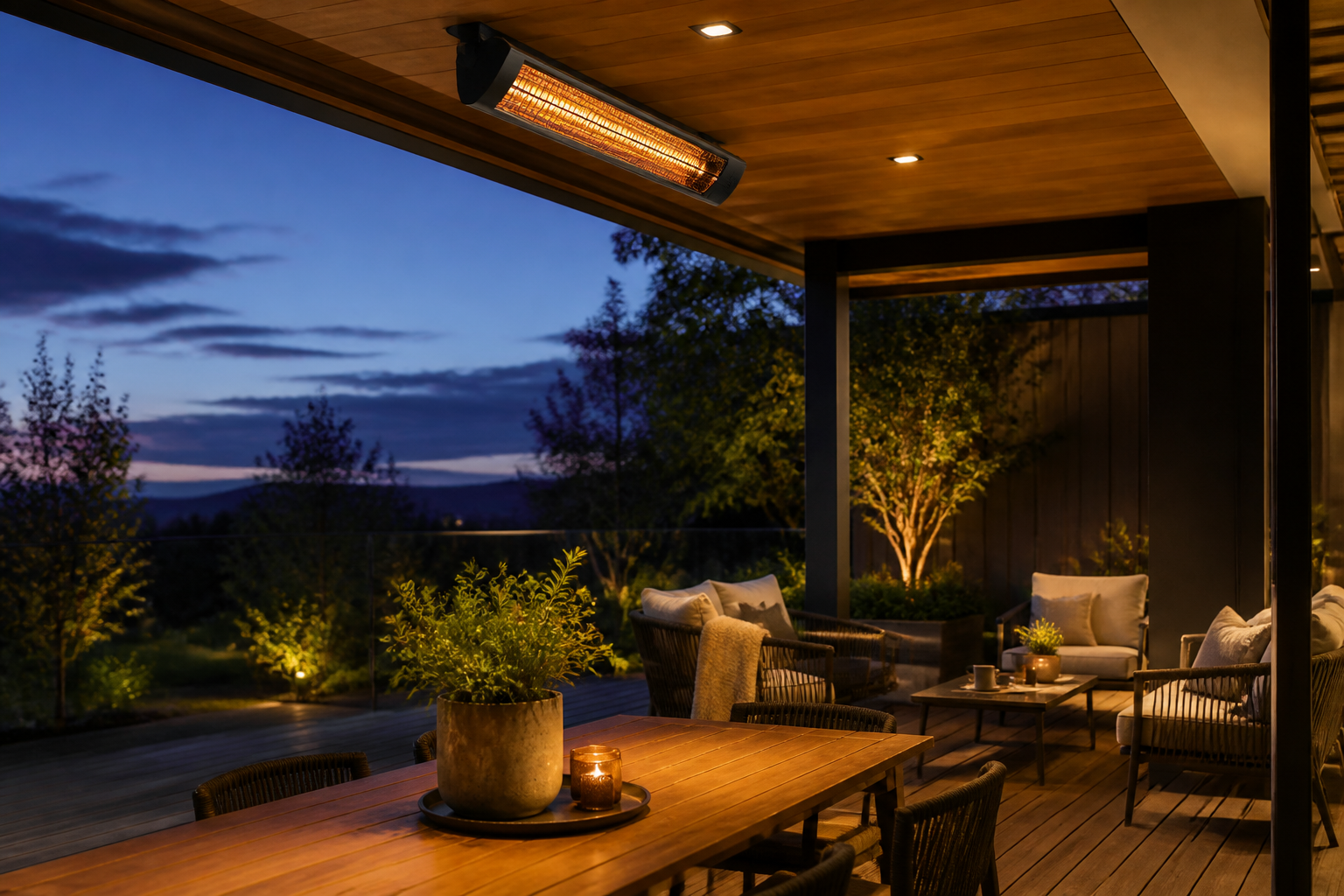
Heater10 is a slim black quartz radiant Outdoor Electric Garden Heater engineered for year-round outdoor leisure spaces. This Heater adopts high-performance quartz infrared heating technology to generate targeted gentle warmth without wasting energy on heating ambient air. Equipped with dual touch and remote control systems, customizable timer function and IP65 all-weather waterproof enclosure, the Heater supports dual installation modes: wall mounting and optional freestanding tripod placement to fit diverse layout demands. Constructed with corrosion-resistant anodized aluminum alloy shell and built-in overheat safety protection, the Heater delivers silent, instant heating for residential gardens, commercial restaurant terraces and event venues. Compatible with 110V/220V dual voltage and certified with CE standards, this versatile Outdoor Heater is a premium all-season heating solution that outperforms bulky, power-hungry traditional outdoor heating equipment.

Rapid Heat Outdoor Heater
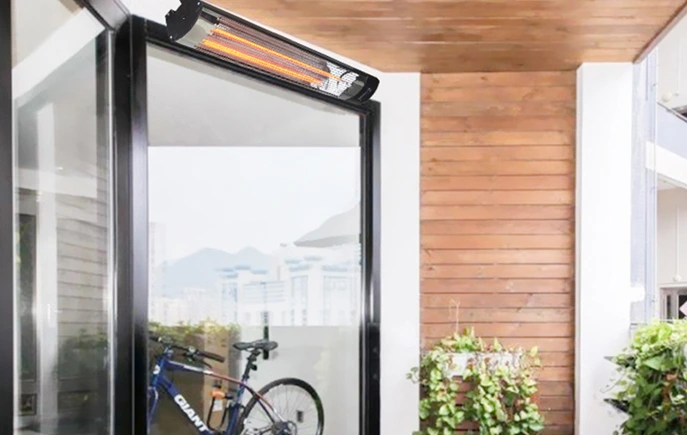
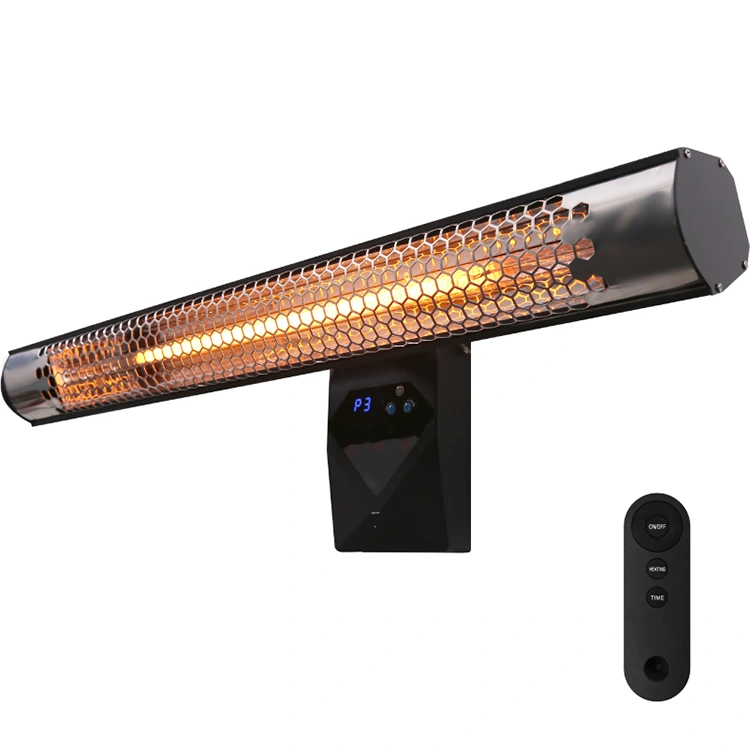
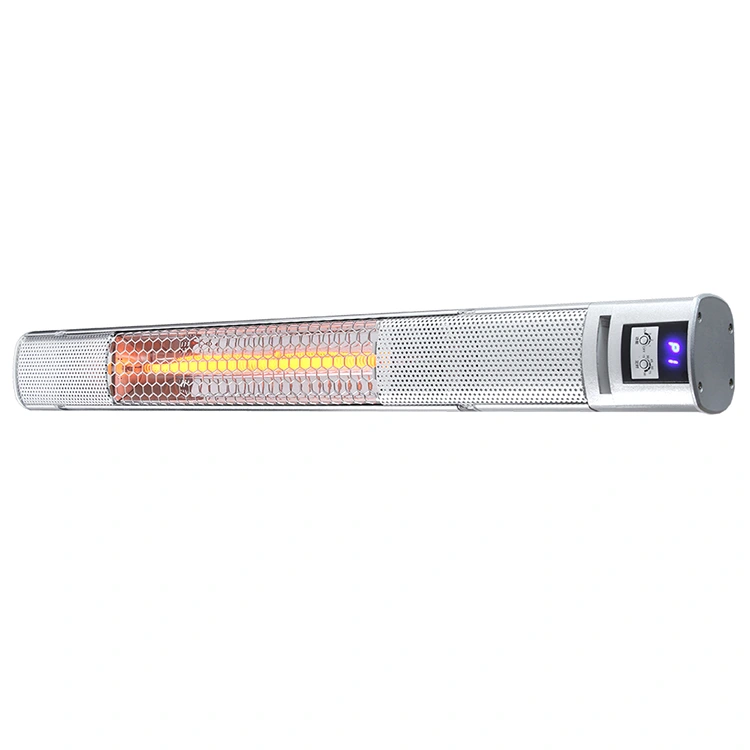
Jiaxing Chenrui Electrical Technology presents Heater06, a slim wall-mounted Rapid Heat Outdoor Heater crafted for compact outdoor and semi-outdoor spaces. Constructed with aviation-grade anodized aluminum alloy and IP65 fully sealed weatherproof housing, this quartz infrared heater delivers instant targeted radiant warmth without air convection loss. It combines a top LCD push-button panel and matched wireless remote for dual control, supporting three adjustable power levels and a 0–8 hour programmable auto-off timer. Equipped with triple automatic safety power-off protection and universal 110V/220V dual voltage, it holds CE safety certification. The space-saving wall-mounted design eliminates floor clutter, catering to residential balconies, café patios and temporary outdoor events, serving as an efficient, low-maintenance heating solution for global retailers and household users.

Fast Heating Infrared Heater
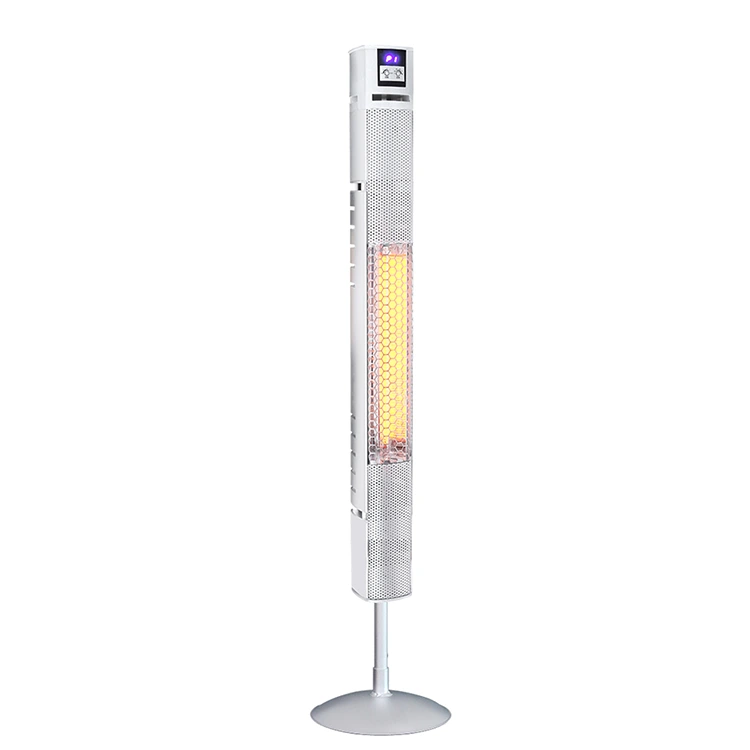
Jiaxing Chenrui Electrical Technology presents the Heater05, a freestanding tower-type Fast Heating Infrared Heater for flexible outdoor and semi-outdoor heating. Built with aviation-grade anodized aluminum alloy and an IP65 full weatherproof sealed structure, this Heater adopts high-efficiency quartz tubes to deliver instant, convection-free radiant warmth. It features dual control via top LCD buttons and wireless remote, 3 adjustable power levels, a 0–8 hour timing function, and triple safety power-off protection. With universal 110V/220V voltage compatibility and CE certification, this Infrared Heater requires no wall installation. Its stable weighted base enables free placement for residential, commercial and temporary outdoor scenarios, serving as a portable, energy-efficient heating solution for global buyers and end users.
Discover the newest Outdoor Heaters from Chenrui. Perfect integration of aesthetics and functionality for modern courtyards and workshops. Durable and classy designs are now available for sale—Request a quick quote today!